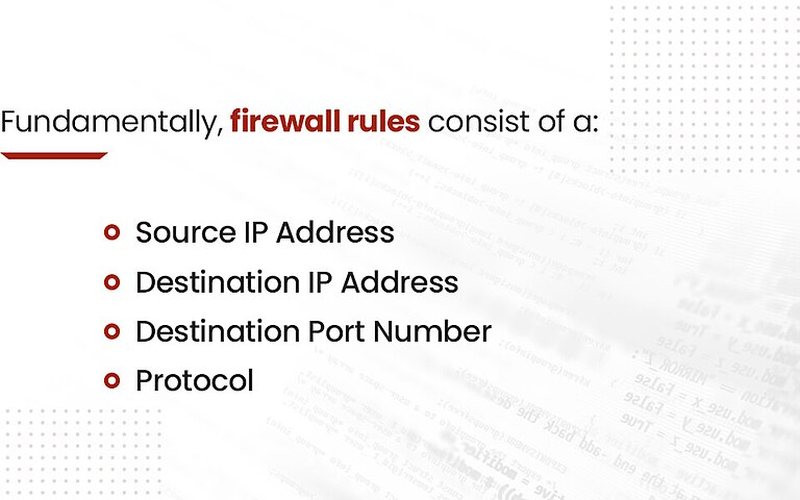
Firewall rule bases are living documents that grow without bound unless someone deliberately prunes them. A rule added five years ago for a decommissioned application may still permit traffic that nobody remembers authorizing. Shadowed rules hide behind broader entries above them, creating the illusion of security while traffic matches a more permissive policy. Audit failures, slow change windows, and actual breaches trace back to rule bloat more often than missing technology. Systematic hygiene transforms an unmanageable ACL into a defensible security control.
Every major firewall platform — Palo Alto, Fortinet, Cisco FTD, Check Point, pfSense — accumulates rules through ticket-driven changes, vendor migrations that import legacy policies verbatim, and temporary exceptions that become permanent because nobody set expiration dates. The problem compounds in organizations with multiple teams managing different firewall contexts without a central governance model. Hygiene work is unglamorous but delivers immediate improvements in security posture and operational velocity.
Establishing an Audit Baseline
Begin by exporting the complete rule set from every firewall context into a structured format. Map each rule to a business owner, original change ticket, and intended purpose. Rules without documentation are candidates for removal after a monitoring period. Classify rules by zone pair — inside to DMZ, DMZ to internet, user VLAN to data center — so you can evaluate policy consistency across similar traffic flows. Identify any-any rules permitting all sources to all destinations on all ports; these require immediate business justification or removal.
Hit-count analysis reveals rules that have not matched a single packet in ninety or one hundred eighty days. Zero-hit rules are not automatically safe to delete — some exist for disaster recovery or seasonal access — but they demand documented justification. Compare hit counts against SIEM flow logs to catch rules that match only malicious traffic, indicating policy that permits rather than blocks unwanted behavior. Export hit counts before major cleanups so you can measure impact and roll back if unexpected traffic patterns emerge.
Shadowing and Redundancy
A rule is shadowed when an earlier rule in the evaluation order matches all traffic the later rule would match, rendering the later rule unreachable. Shadowing often occurs when a broad permit rule sits above a specific deny, or when duplicate rules exist with slightly different object group memberships. Automated rule analysis tools from firewall vendors or third-party policy managers detect shadowing and redundancy across thousands of rules faster than manual review.
Consolidate overlapping rules into object groups for sources, destinations, and services. Object groups reduce rule count and make future changes atomic — updating a group membership updates every referencing rule. Name objects descriptively: role-based source groups like grp-developers-west, application destination groups like grp-jira-prod, and service groups like svc-https-ssh. Avoid IP-based object names that become wrong after address reassignments.
Rule Ordering and Performance
Firewalls that evaluate rules sequentially benefit from placing high-hit rules near the top. A rule matching millions of sessions per day should not sit below hundreds of never-used entries. Reordering requires understanding that first-match semantics make order semantically significant — moving a rule changes what traffic it catches. Use policy manager simulation tools to model reordering impact before applying changes in production.
Deny-by-default at zone boundaries is non-negotiable. The final rule in each section should be an explicit deny with logging enabled. Logged denies provide the data needed to justify new permit rules and identify misconfigured applications generating unwanted traffic. Tune log volume by sampling or aggregating high-volume deny logs so the logging infrastructure itself does not become the bottleneck.
Temporary Rules and Exception Management
Temporary access requests should include mandatory expiration dates enforced by the firewall management platform or calendar reminders with automated removal. Rules tagged temporary that persist beyond ninety days without renewal should trigger escalation to the original requestor's manager. Vendor penetration test exceptions, migration cutover rules, and contractor access entries are the most common sources of expired-but-active permissions.
Implement a formal change process requiring ticket reference, risk classification, and approver identity for every new rule. Emergency changes during incidents should receive retroactive review within forty-eight hours. Quarterly access reviews where business owners certify that their team's permitted flows remain necessary catch drift that automated hit-count analysis misses — especially rules that match legitimate but unauthorized personal use of corporate resources.
Segmentation Alignment
Firewall policy should reflect network segmentation intent. If architecture diagrams show three application tiers with enforced separation, the rule base must not contain shortcuts that bypass tier boundaries. Cross-zone rules should align with Zero Trust principles — specific sources to specific destinations on specific ports with application identification where the platform supports it. Application-aware firewalls that identify traffic by App-ID rather than port number catch evasion attempts that legacy port-based rules miss entirely.
Review rules after network renumbering, data center migrations, and cloud workload moves. Stale object references pointing to decommissioned subnets create both security gaps and false confidence that policy still protects assets that no longer exist at those addresses. Synchronize firewall object groups with IPAM and cloud tagging systems where integration is available.
Ongoing Governance
Schedule quarterly rule base reviews as a recurring operational task, not a project. Track metrics over time: total rule count, percentage of undocumented rules, any-any rule count, average change cycle time, and rules past expiration. Celebrate reductions — a thirty percent rule count decrease with no access complaints means faster troubleshooting and smaller attack surface. Firewall hygiene is maintenance, like patching and certificate renewal. Networks that neglect it eventually pay in audit findings, breach scope, or change windows measured in days instead of minutes.
Automation and Continuous Compliance
Firewall management platforms from Tufin, Algosec, and Skybox automate rule analysis, risk scoring, and cleanup recommendations across multi-vendor estates. Integrate these platforms with change management workflows so new rules receive automated risk assessment before approval. Continuous compliance monitoring alerts when changes violate policy standards — any-any rules, rules without logging, rules using deprecated services like telnet.
Infrastructure-as-code for firewall policy through Terraform provider resources or Ansible collections enables version-controlled policy with CI/CD validation. Treat firewall policy changes like application code — pull request review, automated syntax checking, staged deployment. Not all firewall platforms support full IaC parity with GUI configuration; document gaps where manual steps remain necessary.
Post-change verification captures hit counts before and after modifications to confirm intended traffic matches and unintended traffic does not flow through new rules. Automated testing scripts generate permitted and denied traffic from test hosts validating policy behavior before closing change tickets. This closes the loop between intended policy design and actual enforced policy that hit-count-only analysis cannot fully confirm.